How Moroccan Businesses Get Paid From Abroad: Payment Links and Online Business Accounts
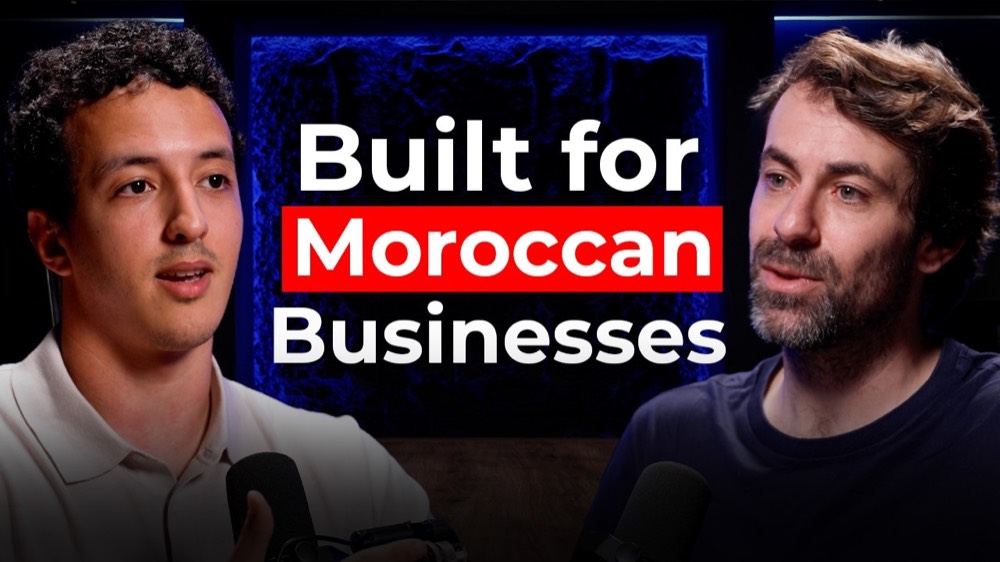
For years, a Moroccan entrepreneur who wanted to get paid through a payment link had to open a company in the US or UK to reach Stripe, use crypto, or deal with wire transfers that a client's bank might flag. Germain Bahri, co-founder of Zazu, explains how Zazu approaches the problem, and what it took to build a fintech in Morocco and South Africa.
Key takeaways
- Zazu offers 100% online professional accounts for Moroccan business owners, with payment links, invoices, cards and expense management.
- Zazu is not a bank. It acts as an agent of a licensed payment provider, through its partnership with Chari.
- Documents depend on your status: an auto-entrepreneur certificate, or for a company the commercial register extract, statutes and managers' ID.
- Opening an account can take hours if the documents are clean, and up to two or three days if they need to be updated.
- Germain's advice to founders: talk to your customers yourself, and treat tough feedback as the most useful kind.
The problem: getting paid from clients abroad
Yassine describes a problem many Moroccan freelancers and entrepreneurs know. Clients abroad often prefer to pay with a payment link such as Stripe, because a bank wire can raise questions at their bank. But when you set up Stripe, you discover your country is not supported, and the usual workaround is to create an LLC in the US or elsewhere just to get paid.
Germain says Moroccans are practical and always find a way, but the options mean paperwork and fees down the line. That is why payment links, which were not at first at the top of Zazu's roadmap, became a major hook for the product.
Who Germain is and why fintech
Germain is half Belgian and half Tunisian, started his career in private banking and left to join the early wave of digital banking and fintech in Europe, around the time Revolut, Monzo and Wise were emerging. After working for early pioneers in digital banking and expense management, he decided to build something of his own. Europe was getting crowded, so he looked at emerging markets. He now lives in Casablanca.
The name Zazu means "movement" in Swahili, according to Germain, with a nod to the wise bird in The Lion King that tells you where to go.
What Zazu offers
Zazu is built only for business owners: entrepreneurs, freelancers and companies. Its products include:
A professional payment account opened fully online. Payments and everyday banking, including transfers and cards. Payment links so businesses and freelancers can collect money. Invoices created from the same account. Expense management with cards for employees or co-founders. And integrations with the tools owners already use, such as accounting software or Odoo for ERP, and payment providers.
Germain says payment links are an adjacent module and not as competitive as Stripe or local specialists for full subscription billing, but they cover what many entrepreneurs need.
Is Zazu a bank?
No, and Germain is careful about the wording. Zazu is an agent of a licensed payment provider, which covers it for licensing and lets it offer a payment account that feels like a bank account. The money is safeguarded like in a bank account. In Morocco this works through its partner Chari. He compares it to how Mercury in the US explains that it is not a bank.
Mercury was an inspiration. Many founders from Morocco working abroad use it, so they expect a modern, instant and intuitive experience when they come back, and ask where Wise or Mercury is. Germain says Zazu wants to show that Moroccan-made alternatives now exist.
Which documents do you need to open an account?
Zazu books a demo call with new customers during its launch phase. Germain says this is to meet customers who will co-build the product, and to see where people hesitate in the onboarding flow. Yassine opened his account in about 90 minutes from Japan.
There are three paths, depending on your situation:
You do not have a business yet. Zazu works with providers such as Legal Plus to create a company. The last record they saw was seven days from no documents to an open account.
Auto-entrepreneur. You need your auto-entrepreneur certificate, plus a CIN or other personal identification.
A company, such as a SARL. You need the commercial register extract (the RC, from the register run by OMPIC), the statutes, and the CIN of all managers. Zazu has to identify the ultimate beneficial owners as part of the KYC required by regulation. Documents must be recent and consistent with the register.
After Zazu's team checks the documents, the licensed partner gives the final approval. Best case is within the day. If documents are outdated, it can take two or three days, mostly depending on how fast the customer replies. Complex cap tables, such as funds that own part of the company, take longer.
The team behind Zazu
Zazu has about 15 people, from founders to engineering, product, operations and early marketing. The first hire was the CTO, someone the founders had worked with before and who had built core banking systems for ten years. The first official hire was a general manager for South Africa with decades of banking experience, who helped negotiate regulator approval and bank partnerships.
Zazu also uses at least three or four AI agents, which Germain says help with first-line customer support and growth outreach. One finds potential customers online, reaches out by email, LinkedIn or WhatsApp, and books demos.
How the Chari partnership came together
Germain noticed Chari while launching in South Africa. The Chari founder was launching a banking-as-a-service business, a world Zazu's founders knew, and became one of Zazu's first angel investors. Chari obtained one of the first licences in Morocco to operate as payments infrastructure. When Zazu was ready for a new market, the two sides met again and integrated in a few weeks.
Advice for fintech founders in Morocco
Germain's advice is not to be afraid. In Tunisia, he says, founders he met spent six years on something that could have taken one because of regulation. In Morocco, he sees Bank Al-Maghrib sending clear signals that it wants innovation and tech-friendly rules. He suggests either working with a partner that already has a licence, or contacting the regulator, which he says answers.
He adds that the regulator has to balance innovation with protecting the banks, which are a major part of the economy. He pointed to Revolut choosing Morocco as one of its first markets in the region as a sign of the opening, while noting it remains to be seen how it works out.
Morocco, South Africa and Europe
Compared with Europe and the UK, where regulators issued new licences and forced banks to open data, Germain says Moroccans are more cautious with new solutions and want to understand where their data and funds go. They are also very practical: does it work, and does it get the job done from A to B? Design matters, but is usually priority number three or four.
Lessons on co-founders, feedback and customers
Germain says he could not have started or kept the business running without a co-founder. They have complementary skills: one looks at product from a practical view, the other from a detail-oriented view. When one is tired, the other pushes.
The toughest part was the beginning. Nobody trusted them with legitimacy in Morocco or South Africa, and early funding came from people who had worked with them. Resilience came from nearly giving up.
He recalls one early customer who complained within a day of opening an account. Germain called him, and he turned into one of the most active early users. "The toughest feedback are the best ones," he says, and founders should get their hands dirty and talk to the first 50 to 100 customers before building a big sales and marketing team.
Where Zazu is going
Germain wants Zazu to be the main operating system for small and medium businesses in Morocco and South Africa, so they use it instead of juggling Stripe, accounting and ERP tools. After that he sees remittances, lending and insurance, and expansion to markets like Tunisia, Egypt and Francophone or sub-Saharan Africa. His goal is a million customers in the next two to three years.
Watch the full conversation
This article is based on the podcast episode with Germain Bahri. Prefer to listen? The full video is on YouTube.
Watch the episodeFrequently asked questions
Can you open a business account online in Morocco?
According to Germain Bahri, yes: Zazu offers professional accounts opened 100% online for auto-entrepreneurs and companies, working with a licensed partner, Chari.
Is Zazu a bank?
No. Zazu is an agent of a licensed payment provider and offers a payment account that works like a bank account, with funds safeguarded.
How can a Moroccan business get paid from clients abroad?
Zazu offers payment links, so entrepreneurs can collect payments from clients abroad without opening a company overseas first.
What documents do I need to open a Zazu account?
For an auto-entrepreneur, the certificate and a CIN. For a company, the commercial register extract, statutes and the ID of all managers, so Zazu can identify the beneficial owners.
How long does it take to open the account?
If documents are clean, it can be the same day. If they need updating, two to three days, mostly depending on how fast the customer responds.
Mentioned in this episode
More from The Moroccan Vault
This article summarizes an interview with a company founder and is for information only. Check current terms, fees and requirements with the provider and your bank. Transcribed and summarized from the episode; if you spot an error, tell us.