How to Invest in the Moroccan Stock Market: A Former McKinsey Consultant Explains
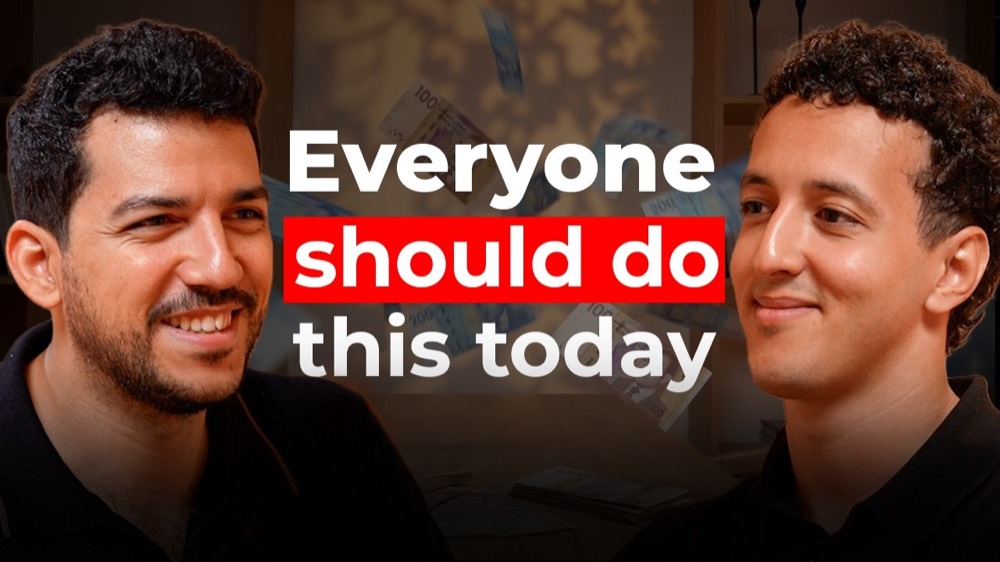
Ataa Soulami spent more than seven years as a management consultant at McKinsey in Casablanca, London and the Middle East before he started posting about the Casablanca Stock Exchange. In this episode he explains how he evaluates a stock, walks through his thinking on Marsa Maroc, and covers the practical steps for starting to invest in Morocco.
Key takeaways
- To invest in a stock you need two things: a good company, and a good price.
- Free cash flow, not just accounting profit, shows whether a company generates real cash.
- An expensive P/E ratio does not automatically mean you missed the boat, if the growth is not fully priced in.
- Beginners can start with OPCVM funds with a small monthly amount, after saving and building an emergency fund.
- MREs and foreigners can invest too, but they must open the account in person in Morocco.
Why talk about the Moroccan stock market
Ataa started making content a little over a year ago, with a video criticizing people who promise crazy returns and scam others. Nobody was talking about the Bourse de Casablanca seriously at the time, and several IPOs were happening, so the content grew. He kept focusing on Moroccans and on Darija and French, because the more niche the audience, the likelier social media is to work.
He had learned the Moroccan market by talking about it. The concepts are the same everywhere, he says, but Morocco has specifics: a less deep market, different mechanisms and no simple trading apps.
This is not financial advice. The episode is informational, and Ataa shares his own experience.
Step one: a good company at a good price
Ataa avoids companies that are declining, unprofitable, overly indebted or that he does not understand. Once a company looks good, he asks whether the price is attractive. A great company that is too expensive may not give you a return.
Free cash flow. Everything boils down to the cash a company can generate. Accounting earnings include non-cash items, so Ataa looks at free cash flow: cash from operations minus the investment needed to keep the business running, including working capital and capex. That cash can be paid out as dividends or reinvested. Negative free cash flow can be acceptable if the company is funding good new investments, but it is a bad sign if margins are falling.
Business model. You should be able to explain in simple terms how the company makes money, what protects it from competitors and what drives demand. His example is Upwork, a marketplace with high margins and a very low valuation because AI could replace some freelance work. He stays within his "circle of competence", an idea he borrows from an Indian investor.
The P/E ratio explained
The price-to-earnings ratio divides the stock price by earnings per share (or market cap by total earnings). It tells you how many years of current earnings you pay for the company. Ataa uses a rough guide: above 20 to 25 is a bit expensive, below 15 is cheap and in between is normal, noting this oversimplifies and differs by industry.
Prices also reflect what investors expect. Upwork traded at a high multiple during COVID when freelancing was booming, and at a P/E of about six or seven today.
When should you sell a stock?
Ataa gives three reasons people sell. Needing the money is the worst. Taking profits early because you feel greedy is the second worst, and can cost much more than a 20% to 30% loss if the company keeps growing. The legitimate reason is a change in your thesis. Knowing when to sell means knowing why you bought.
Does value investing work in Morocco?
Ataa says yes, with limits. The market's trading volume is low, so buying or selling can take time and a large order can move the price for non-fundamental reasons. Residents can only invest in about 75 listed companies, so you cannot insist on only amazing, cheap companies and may find nothing. Over time, he says, prices tend to come back to reality, so value investing still applies, adapted to what is available.
Case study: Marsa Maroc
Ataa recorded the episode while Moroccan stocks had dropped in 2026 after a euphoric 2024 and 2025, and he considers corrections a good time for long-term investors to start. His example is Marsa Maroc, a port operator that buys the right to operate ports from the state and earns money from container handling, storage and transshipment.
Such companies are usually considered defensive because they are predictable, with long state contracts. But Marsa Maroc has also grown fast: Ataa says revenue rose roughly 50% in three or four years, from about 4 billion to nearly 6 billion dirhams in 2025, with net margins around 30%. Growth comes from running existing ports near capacity and from new infrastructure, including a port in Nador, with plans through 2030. It carries risk because it is borrowing to finance the capex.
The stock went from roughly 200 to over 800 dirhams in about three years. Its historical P/E was in the 20s, and Ataa estimated it was closer to 35 at the time. Does that mean it is too expensive? Not necessarily, he says. If a stock rises 4x because earnings grew, and growth continues, an expensive multiple can still make sense. The question is how much future growth is already priced in. Investing regularly over time, or dollar-cost averaging, helps balance entry prices.
Learning more: Moroccan Value Investors
Ataa runs a community called Moroccan Value Investors, with an online pre-recorded course (from what a stock is to reading financial statements and valuation) and a bi-weekly live session with a portfolio manager who has more than 15 years of experience. He also built IDBOURSE, where you can read the financial data of Moroccan listed companies and use a virtual portfolio to practice with fake money.
How to start investing if you live in Morocco
Ataa shares his own checklist, again as personal experience rather than advice:
1. Spend less than you earn. He quotes the idea attributed to Charlie Munger or Warren Buffett: if you spend less than you earn and invest the difference consistently, you cannot help but get rich.
2. Build an emergency fund so you never have to sell stocks to cover life's surprises.
3. Start with OPCVM. These are mutual funds managed by professionals who charge fees, different from an ETF, which passively tracks an index. ETFs are not available in Morocco yet, but have been announced for around the end of this year or early next. The minimum is often a few hundred dirhams per share, and Ataa says consistent monthly investing, even 500 dirhams, matters more than a single small lump sum.
4. Learn with paper trading before using real money, and keep a small share (he suggests around 30%) for your own picks while the rest stays passive.
Banks, brokers, MREs and account types
You can invest through banks or through brokerage firms called *sociétés de bourse*. Not all of them have mobile apps, and some charge a fee for access to an online trading dashboard. Otherwise you may have to call your broker. The market is regulated by the AMMC.
Moroccans abroad and non-Moroccans can invest in the Moroccan market, but they have to open their account in person in Morocco, for ID verification. After that they can trade like any other investor. Moroccan companies can also invest spare cash.
There are two main accounts. The CTO (compte-titres ordinaire) is a normal securities account: you pay tax on realized gains and dividends, withheld at source. The PEA (Plan d'Épargne en Actions) has the same functions but is tax-free on gains and dividends if you do not withdraw for five years. After the first withdrawal the tax advantage stops for new gains, so it suits long-term investors.
Advice to his younger self
Ataa's advice: do not sell too early. He sold Meta and other great companies after a 10% gain with small amounts and no discipline. He also tells the story of putting about $2,000 into Nvidia around 2021 or 2022 after a software-engineer friend recommended it, and selling when it recovered because he had no conviction. Even his more knowledgeable friend did not ride the full wave. Removing emotion, focusing on the business and keeping conviction is what makes holding hard, he says, which is why he thinks ETFs are good: they do not care how expensive a stock gets.
Watch the full conversation
This article is based on the podcast episode with Ataa Soulami. Prefer to listen? The full video is on YouTube.
Watch the episodeFrequently asked questions
Can Moroccans abroad (MRE) invest in the Moroccan stock market?
Yes. According to Ataa Soulami the market is open to any investor, including foreigners and companies. The account must be opened in person in Morocco for ID verification.
What is the difference between CTO and PEA accounts?
A CTO is a normal securities account where gains and dividends are taxed at source. A PEA works the same way but gains and dividends are tax-free if you do not withdraw money for five years.
Are there ETFs in Morocco?
Not yet. Ataa says they have been announced and may arrive around the end of this year or the start of next. For now Moroccans can use OPCVM, which are professionally managed funds.
How much do I need to start investing in OPCVM?
There is not a fixed minimum other than the price of one share, often in the hundreds of dirhams. Ataa recommends investing consistently each month, even 500 dirhams.
What is the P/E ratio?
It is the stock price divided by earnings per share. It shows how many years of current earnings you pay for the company. Roughly, below 15 is cheap and above 20 to 25 is expensive, with differences by industry.
Mentioned in this episode
- Ataa Soulami on Instagram
- Moroccan Value Investors community
- IDBOURSE
- Bourse de Casablanca
- AMMC, Moroccan capital market authority
- McKinsey & Company
- Upwork
- Marsa Maroc on Wikipedia
More from The Moroccan Vault
This episode and article are for information only and are not financial advice. Do your own research before making any investment decision. Transcribed and summarized from the episode; if you spot an error, tell us.