How to Start a Hospitality Business in Morocco: Lessons From the StayHere Co-Founder
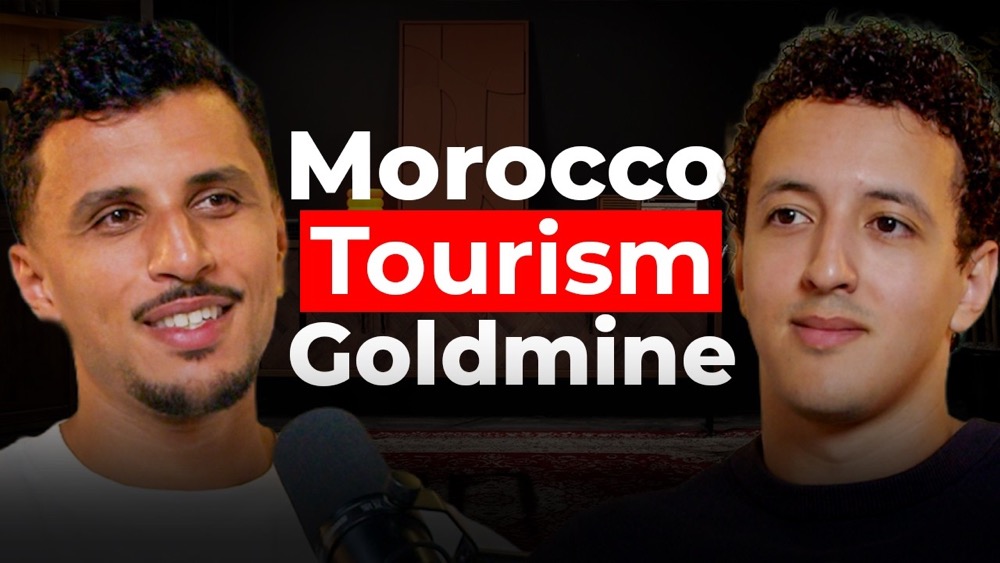
Mohamed Benzakour went from playing professional football to co-founding StayHere, a Moroccan hospitality brand that he says now runs 12 locations. In this episode he explains how StayHere started in 2020, the three partnership models behind its growth, the partner exit that nearly collapsed the business, and his advice for anyone who wants to start a hospitality business in Morocco.
- Guest
- Mohamed BenzakourCo-founder of StayHere
- Episode published
- November 17, 2026
- Reading time
- 9 min
In this article
- From professional football to entrepreneurship
- Starting StayHere during Covid
- Building a homegrown brand against the global chains
- What the StayHere experience is built on
- Who StayHere is built for and how it chooses cities
- Three ways StayHere partners and grows
- The partner exit that almost collapsed the business
- Tourism in Morocco, the 2030 World Cup and underrated cities
- Buying an apartment versus building a hospitality brand
- Building a team and keeping standards across locations
- Why founders should serve their own customers
- Advice for starting a hospitality business in Morocco
- Where StayHere is going, and the 7med Circle
- His spiritual journey and advice for young Moroccans
Key takeaways
- StayHere started in June 2020, during Covid, in half of a 14-apartment building in Rabat that its founders signed before they had a shareholders' agreement.
- Mohamed says StayHere now runs 12 locations, including a new sub-brand, StayHere Riads, in a 124-year-old building in Essaouira.
- StayHere grows through three models: hotel management agreements (HMA), leases of about 9 years, and ownership through a separate vehicle, StayHere Capital.
- A partner exit in late 2024, a month after opening a 252-room property, nearly collapsed the business. His rule since: values come before the business opportunity.
- His advice for hospitality founders: it only works if you genuinely care about others, so stay obsessed with your customer and serve them yourself.
From professional football to entrepreneurship
Mohamed describes himself as a "human-centered entrepreneur." Born and raised in Morocco, he is 35 and studied in Morocco before going to the US as a student athlete. He played for Nova Southeastern University and was drafted to play for Miami FC. He returned to Morocco in 2018, got married, and played two seasons in the professional Moroccan league.
Business started earlier than StayHere. In 2014, in Miami, he rented out his room on Airbnb while visiting family, earning money from a guest who needed a few weeks' stay. With Moroccan friends who lived with him, he turned that into a small short-term rental management company handling a few units in downtown Miami.
When Covid hit, that business slowed in the US. Around the same time he turned his ankle and stopped playing football. He says he had always dreamed of a real estate portfolio and a hotel business, so 2020 became the start of that dream, though he adds it was not a planned launch date.
Starting StayHere during Covid
StayHere started in June 2020. Before Covid, Mohamed and his wife had planned to buy a small apartment building in Marrakech, but travel between cities stopped before they could sign. His future co-founder, Mohamed Lachgar, then messaged him on Instagram about his Airbnb listing and asked about his strategy during Covid. They met, shared their stories, and decided to build something bigger together.
The first building came before the paperwork. Mohamed says they signed their first property, half of a 14-apartment building in Rabat, before they had a shareholders' agreement. Covid-era scarcity and uncertainty made it a good moment to negotiate, and they took half the building because they did not have the capital for all of it. They still operate it today.
Building a homegrown brand against the global chains
Coming from professional sport, Mohamed says he wanted a professional business from day one. When he and his co-founder studied hospitality in Morocco, they saw an industry that had not been challenged for years. He calls the four big international groups, Hyatt, Accor, Hilton and Marriott, "the dinosaurs": they arrived early, hold the best assets and are recognised brands.
Moroccan-owned hotels exist too, he says, but they usually belong to families whose first business was something else, such as industry or real estate. StayHere set out to fill that gap with a homegrown brand built for hospitality first, and for Moroccans as well as visitors.
Entrepreneurship is a lifestyle.
Mohamed Benzakour
What the StayHere experience is built on
Mohamed says the brand rests on three things. The first is hospitality through kindness, which he treats as the core of the culture. The second is design, which he says is no longer a plus but "hygiene" in today's market. The third is technology, to ease booking online and the arrival of guests through self check-in.
The name works as a symbol. The logo is a circle and a triangle: the circle is the place where you stay, and the triangle is a play button that points to "here". The slogan is "Stay here, be present." Mohamed says the idea is to invite guests to be grounded in the moment, in a world he calls chaotic.
On technology, he says StayHere has built Morocco's first self check-in kiosk. His co-founder, a former digital nomad, spent more than a year working with a manufacturer to make it. It is not operational yet, but Mohamed says it will launch soon.
Who StayHere is built for and how it chooses cities
Mohamed says there is no single target customer. StayHere's guests are mainly travellers looking for something new, and the aim is an impeccable stay in whatever format they choose: an apart-hotel, a boutique hotel or a riad.
He says StayHere now runs 12 locations. The newest is a sub-brand called StayHere Riads, which focuses on heritage buildings in old medinas. The first is in Essaouira, in a 124-year-old building with 14 rooms and food and beverage service. A gym and sauna are planned for the second quarter of 2027.
On expansion, Mohamed says his father served in the Moroccan military, so he grew up moving between cities such as Rabat, Casablanca, Meknes, Agadir and Marrakech, which helps him read each local market. A hospitality brand has to be present in the six World Cup host cities: Tangier, Casablanca, Rabat, Marrakech, Agadir and Fes. But he believes secondary cities matter just as much, and says StayHere is looking at Kenitra and El Jadida.
Three ways StayHere partners and grows
Mohamed says StayHere took part in Franchise Exhibition Morocco 2026, held on 15 to 17 April at the Foire internationale de Casablanca and organised by the Fédération Marocaine de la Franchise, where he was looking for partners. He praised the organisers for bringing international and local investors together to showcase Moroccan brands. StayHere works through three models.
1. Hotel management agreement (HMA). The owner invests, and StayHere operates the hotel for a base fee plus a success fee based on gross operating profit. Mohamed calls this the prominent model. He says an HMA needs at least 50 keys (rooms) to make sense for StayHere.
2. Lease. This is the most frequent model. StayHere takes a commercial lease, usually for 9 years, and checks that the rent works against revenue per available room before it signs.
3. Ownership through StayHere Capital. About two years ago the founders created a separate vehicle that owns commercial real estate with co-investors, and hands the properties to the StayHere management company to operate.
The partner exit that almost collapsed the business
Asked about red flags in a partner, Mohamed goes back to 2023 and 2024. StayHere took over a closed residence in 2023: built in 2015, with 252 rooms on about a hectare across eight blocks. It had to be converted from residential use so it could be classified under the Ministry of Tourism. Mohamed says they raised roughly $2.5 million in funding with a mandate to approach the banks, designed the concept, hired more than 60 people and signed a 9-year HMA.
It opened around December 2024. A month after the opening, he says, the landlord sent a notice to vacate and decided to run the property itself. StayHere had hired a finance team, an HR team and a call centre in Rabat for the project, and he says the business was close to collapsing. He calls it one of the toughest experiences of his career, especially because StayHere had until then built good relationships with landlords.
His lesson comes from a quote he attributes to Warren Buffett, that "you cannot make money with bad people." Before the assets and the money, he says he needs to see a good human who shares StayHere's values. He would refuse an investor who does not believe in Moroccan youth and brand builders, because in Morocco, he says, people value capital but not know-how, while hospitality is all know-how.
Tourism in Morocco, the 2030 World Cup and underrated cities
Mohamed points to 19.8 million visitors in 2025, compared with a 10 million target that felt like a dream in 2010. He expects the 2030 World Cup, which Morocco will co-host, to be the start of a new era of hospitality, and says he sees Morocco in the top five tourism destinations in the world within 20 years.
His warning is about supply. Accommodation has to grow with demand, he says, to avoid the problem Qatar faced after its World Cup. Some cities need more rooms and others fewer. He also wants visitors spread across the whole country instead of half going to Marrakech.
He considers Morocco as a whole a "blue ocean" and would not invite new brand builders to crowded cities such as Marrakech or Casablanca. He prefers second-tier cities that mix leisure and business, with a summer season and corporate demand from factories, and that sit close to Rabat or Casablanca.
Buying an apartment versus building a hospitality brand
Mohamed says these are two different businesses. Buying an apartment and listing it online is mainly real estate: you want a return on your investment through rent. Building a hospitality brand makes you an operator with a voice. He says brands advance a greater cause, and that creating one is a responsibility to change how customers see the world, not only a way to make money.
Building a team and keeping standards across locations
Mohamed says "human capital is hospitality," and admits StayHere has failed hard at finding the right people. He puts the reason down to culture: StayHere is bringing a culture of kindness into a society where, he says, the habits are very different from what you hear in a café. The one rule he gives is that nobody in the company should backbite about a customer or a colleague. Shifting a lived culture is slow, he says, and StayHere is only six years old.
To keep standards across locations, StayHere focuses on the general manager at each site, whom he calls the "kindness ambassador." If the manager fits the culture, he says, they will pass it on to their team. He and his co-founder also visit locations and speak with guests and staff.
Why founders should serve their own customers
At the new riad in Essaouira, Mohamed says he spent two months serving breakfast to guests, taking orders and checking that omelettes were right. He says the founders spend about 40% of their time in operations, listening to guests and staff.
He argues that many entrepreneurs think they have more important things to do than listen to customers. In hospitality, he says, that is the most important part of the business: a happy guest refers you and becomes a "raving fan."
Advice for starting a hospitality business in Morocco
Mohamed says to honour hospitality as a human value: genuinely caring about others. If you do not carry that quality yourself, he suggests not starting a hospitality company. If you do, you will still hit the bottom like any entrepreneur, and at that point you have to remember why you started. His point is that hospitality is about who you serve, so the focus has to be the customer. "Customer obsession is the key," he says. This applies beyond accommodation, he adds, to services and tour operators too.
Where StayHere is going, and the 7med Circle
In 10 years Mohamed wants StayHere to be a Moroccan label for kindness and hospitality, in international cities such as Tokyo, Cape Town, Dakar and Abidjan, and in Kenya, so travellers understand the Moroccan standard.
Beyond StayHere, he started the 7med Circle, a community for young Moroccans, as a way to give back what he learned from mentors and from the countries where he lived. He describes 7med as your alter ego, your best self. Each year, usually before Ramadan, it runs a 30-day challenge built on four pillars: spirituality, kindness (giving something every day), learning something new, and physical exercise. It also runs boot camps. He says a rebrand, a website and a more structured community are planned for 2027, and that people can follow its Instagram page until then.
His spiritual journey and advice for young Moroccans
Mohamed says that after his football contract and his first businesses, he still felt empty. After performing Umrah, he became more disciplined in his religion and felt an inner peace that, he says, drove his performance. He says his aim shifted from where he wants to go to how much he needs to give, from chasing numbers to chasing impact.
For young Moroccans who doubt whether to start a business, he says entrepreneurship is a way to gain freedom and to challenge the status quo, and that you should not do it for profit alone. "Entrepreneurship is a lifestyle," he says, and a lifetime vision, not a project of a few years. He wants more Moroccan entrepreneurs who change industries, not only business owners.
Watch the full conversation
This article is based on the podcast episode with Mohamed Benzakour. Prefer to listen? The full video is on YouTube.
Watch the episodeFrequently asked questions
How did StayHere start?
According to Mohamed Benzakour, StayHere started in June 2020, during Covid, when he and his co-founder signed half of a 14-apartment building in Rabat before they had signed their company agreement. He had run short-term rentals in Miami since 2014.
How many locations does StayHere have?
Mohamed says StayHere runs 12 locations, a mix of apart-hotels and boutique hotels, plus a new sub-brand, StayHere Riads, whose first property is a 124-year-old building in Essaouira.
What partnership models does StayHere use?
Three: hotel management agreements (HMA), where StayHere operates for a base fee and a success fee on gross operating profit; leases, usually for 9 years; and ownership with co-investors through a separate vehicle called StayHere Capital.
Which Moroccan cities does Mohamed Benzakour see as opportunities for hospitality?
He favours second-tier cities that combine summer leisure and corporate demand, close to Rabat or Casablanca, and says StayHere is looking at Kenitra and El Jadida. He would not invite new brands into crowded cities such as Marrakech or Casablanca.
What is Mohamed Benzakour's advice for starting a hospitality business in Morocco?
Honour hospitality as a human value and genuinely care about others. If you do not have that, he suggests not starting. Stay obsessed with your customer, and serve them yourself.
Mentioned in this episode
- StayHere
- StayHere on Instagram
- Mohamed Benzakour on Instagram
- Franchise Exhibition Morocco 2026
- Fédération Marocaine de la Franchise
- Airbnb
- Hyatt
- Accor
- Hilton
- Marriott
- Nova Southeastern University
- Miami FC
- Tourism in Morocco
- 2030 FIFA World Cup
- Warren Buffett
- Franchising
- Riad
- Umrah
Hosted by Yassine BounanaThe Moroccan Vault is a podcast of conversations with Moroccan entrepreneurs, in English. Follow on Instagram, LinkedIn or YouTube.
This article summarizes an interview with a company founder and is for information only. Figures, dates and claims are as stated by the guest in the episode and have not been independently verified. Transcribed and summarized from the episode; if you spot an error, tell us.